Endurance Durability: Why Athletes Fade & How to Stop It
May 7, 2025
Harrison Dudley-Rode
Why do some athletes hold pace while others fade? Learn the science of endurance durability + how to train for it. Powered by Athletica AI.
Ever notice how some athletes can hold pace deep into a marathon or long ride while others fade dramatically? In the world of endurance sports, we often hear about VO₂max, lactate thresholds, and running or cycling economy as the three pillars of athletic performance. But there's another essential ingredient—often overlooked—that can significantly impact your performance: endurancedurability.
This post explains what endurance durability is, why it matters, how we can measure it (inside the lab and out on the road), what factors influence it, and what might improve it.
What Is Durability in Endurance Sports?
In endurance sport, durability is the ability to maintain your "fresh" performance capacity as fatigue accumulates.
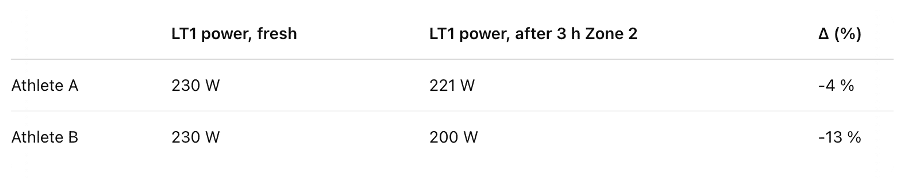
Example. Two cyclists have identical lab‑tested fitness: First Ventilatory Threshold (VT1) power = 230 W when fresh. Both go for a 3 h ride ~20 W below their VT1 power – A reasonably comfortable Zone 2 effort.
Athlete A's physiology "holds up" far better—that's a visual representation of an athlete with 'better' durability.
Does endurance durability affect performance?
In marathons, triathlons, or cycling races lasting several hours, you might start with impressive numbers—great economy, high lactate threshold, superior VO₂max—but as we've just learnt, these will deteriorate as you fatigue. Your success becomes less about the peak numbers you've achieved in the lab and more about how well you can maintain them as the race progresses.
Why Durability Matters More Than You Think
Suppose two athletes both have a marathon pace of, say, 4:30 per kilometre based on fresh fitness, but one has poorer durability. In that case, they might start slowing dramatically after 25–30 km because their effective threshold has decreased – what was once a 'Zone 3' race pace has now become an unsustainable 'Zone 4' pace above their second threshold. The more durable runner can keep 4:30/km rolling much deeper into the race.
It's important to note that the between-athlete variability is huge: studies show threshold power declines on average ~10% after multiple hours of exercise; however, at an individual level, the decline can be anywhere from < 1 % (world‑class cyclists) to > 30 %! So unpacking how you can move the needle towards the lower end of that decline is of interest to all of us concerned with performance.
How do we measure durability?
There are two primary ways to measure durability:
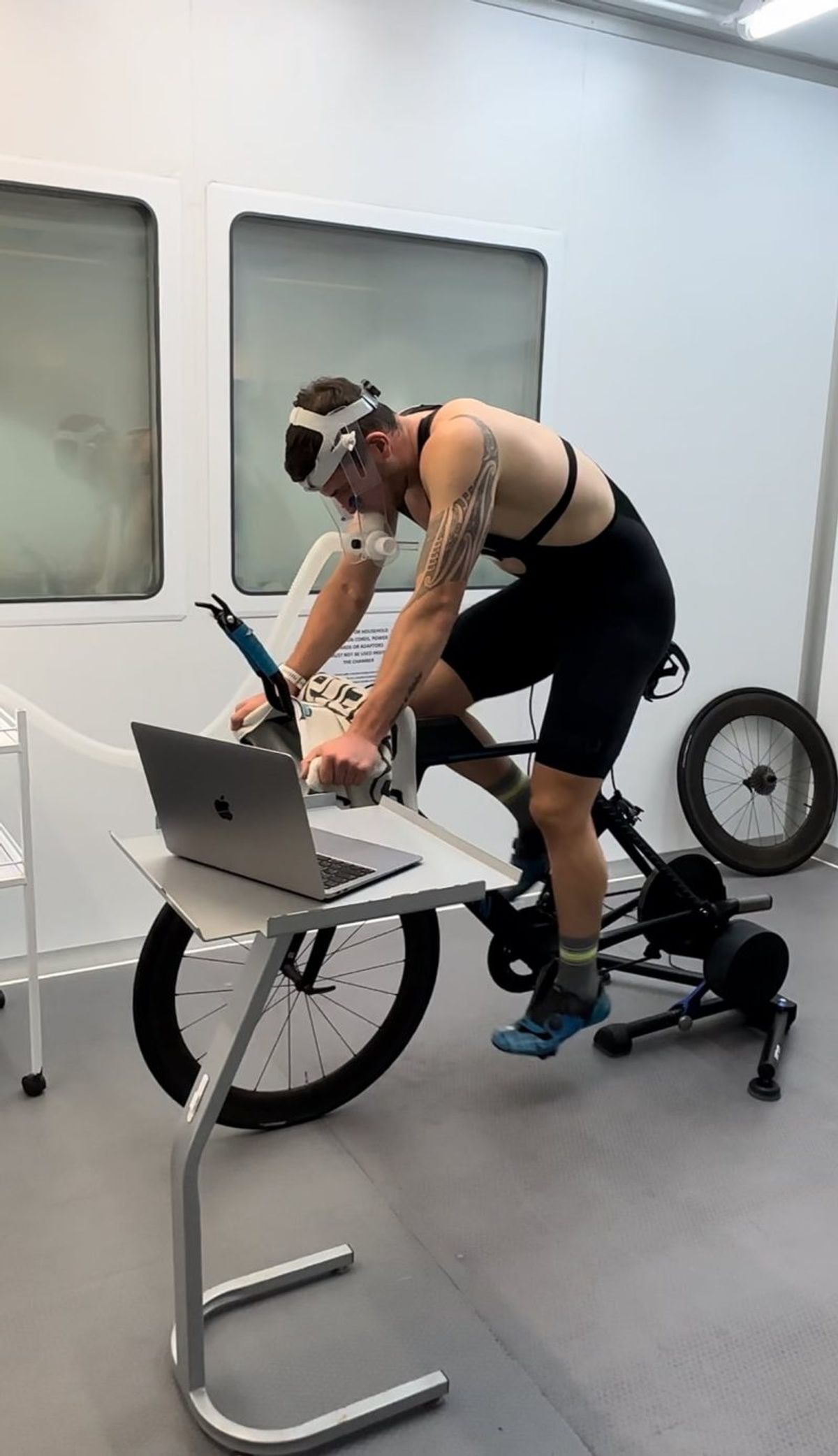
Physiological durability (Monitoring changes in physiological metrics – Lab needed)
Measure key variables like your first or second threshold, VO₂max, or economy before and immediately after an extended session. Smaller, later drops = higher durability.
Monitoring decoupling of heart rate or ventilatory measures, such as breathing frequency, against speed or power
Performance durability (Monitoring changes in maximal mean power or speed)
Compare how your maximal mean power (MMP)—the highest power or speed you can maintain for a specific duration— for 1-20 min efforts change following accumulated fatigue (e.g., a 5‑min TT following 2.5 h of riding).
Many professional cycling teams now track durability this way because it can be done in the field with any power meter.
Side note: The next major step for Sports Science 3.0 is to figure out how we can actually measure physiological durability in real-time so athletes can adjust their effort in response to changes in their performance capacity during a race or training session.
Athletica's Workout Reserve holds promise to be used as a pseudo-measurement of performance durability by giving you real-time insights into how far your current effort is from your historical best effort.
What affects durability?
Not all races and training sessions are created equally! There are several factors that will affect your durability and should be considered/controlled for when implementing assessment protocols:
Exercise Intensity and Duration
The higher the intensity or the longer the duration, the greater your decline in durability.
Studies show even small amounts of high-intensity exercise can cause significant performance drops compared to lower intensity exercise with the same total work.
Nutrition
Carbohydrate availability significantly impacts durability. Athletes who maintain a steady supply of carbohydrates during prolonged exercise demonstrate smaller decreases in both first and second threshold, and performance.
Implementing exercise and nutrition plans that aim to increase your ability to utilise fat as a fuel source may also help to spare the limited supply of the body's carbohydrates stores – essentially improving durability the same way that carbohydrate ingestion does.
Environmental Conditions
While direct studies are yet to be published, it is presumed that heat and altitude will intensify the rate at which performance and physiological functions decline.
In parallel, training in and adapting to these environments is likely to limit the decline in durability.
How to Train for Durability
One of the biggest unknowns is how to improve durability in endurance athletes. As of May 2025, it's still unclear how to actually 'train' our durability, but a recently published paper by Jones and Kirby and another by Hunter, Maunder and others suggests these steps may be the best training methods to build durability in endurance athletes:
Long-term consistency and high cumulative training volumes over several years
Regularly including prolonged training sessions, especially those including progressive intensity or high-intensity efforts
Incorporating heavy strength and plyometric work into your training program, especially for runners.
So, in essence, ensure to follow an appropriate training plan, or better yet, work with a coach that knows how to titrate your training load appropriately to achieve maximum gains while avoiding 'over-training' (such as Athletica's AI Coach!). This is crucial so you can stay consistent with training, injury-free, hopefully more durable, and ultimately perform better!
Train smarter with Athletica.
Your AI coach is waiting.
Adaptive training plans that adjust to your fitness, fatigue, and schedule — so you improve with confidence.
Durability is the "fourth pillar" of endurance performance, standing alongside VO₂ max, lactate thresholds and movement economy.
Laboratory testing remains the gold standard for quantifying durability, yet field methods (MMP after accumulated fatigue) are now mainstream among pro athletes and professional cycling teams.
Nutrition, environment, and smart training all influence it.
Cracking the code on how to train durability may unlock the next jump in endurance performance, turning good lab numbers into race‑day results!
Frequently Asked Questions (FAQs) About Durability
1. What does durability mean in endurance sports?
You might ask: What is the difference between VO₂max and durability in endurance sports?
Durability refers to an athlete's ability to maintain their "fresh" physiological performance—like VO₂max, pace, power, or threshold—despite accumulating fatigue over time. It's a key determinant of race-day success, especially in long events like marathons or Ironman triathlons.
2. How can athletes measure their durability?
Durability can be measured in two main ways:
Physiological durability (via lab testing): observing post-fatigue changes in VO₂max, thresholds, and economy.
Performance durability (in the field): Coaches have begun measuring durability in endurance training with power meters, more specifically, tracking maximal mean power or pace after prolonged exercise. Tools like Athletica's Workout Reserve may offer real-time estimations during sessions.
3. What causes a decline in durability during a race?
Key factors include:
Exercise duration and intensity: Higher intensities cause greater declines.
Environmental stress: Heat and altitude will likely impair durability.
4. Can durability be improved through training?
While durability is still being fully decoded by sports science, current evidence suggests it can be enhanced by:
Consistent, high-volume endurance training over years
Long sessions with variable or high intensity
Strength and plyometric training (especially for runners)Athletica's adaptive AI training platform helps balance load progression to promote these adaptations safely and sustainably.
Curious about how durable you are?
Try Athletica and find out.