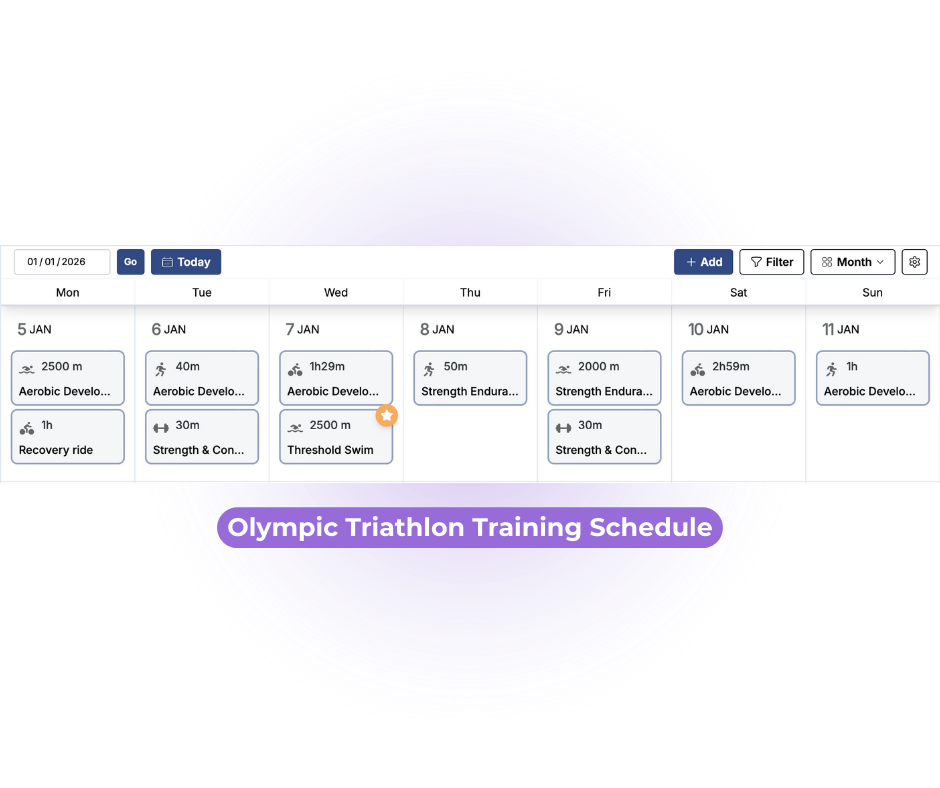
A season-long, adaptive triathlon training platform built to manage swim, bike, and run together.

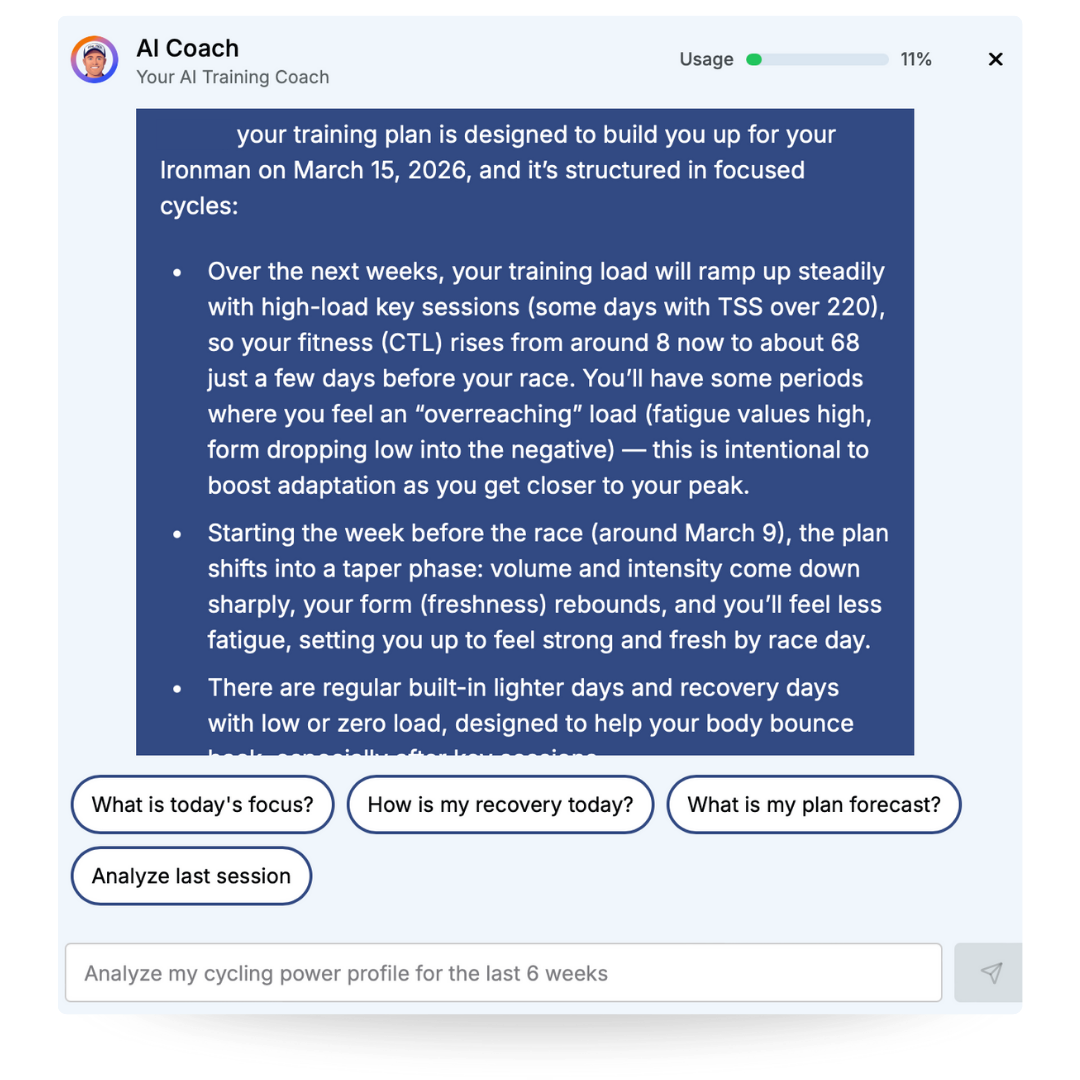
Whether you’re a seasoned triathlete or gearing up for your first triathlon race, Athletica is designed to manage three sports without overload, using adaptive training logic grounded in real sports science. Our advanced AI-driven platform designs personalized triathlon plans that adapt to your unique needs, ensuring you train smarter and achieve your best performance across all three disciplines.
With Athletica, your training plan isn’t fixed, it’s responsive. It pays attention to:
As your body changes, the plan changes with it. Training load is managed across swim, bike, and run so gains in one sport don’t quietly sabotage another.
.png)
Athletica is built for triathletes who value consistency, recovery, and long-term progress - not shortcuts or hero weeks.
Whether you’re building consistency for your first sprint, refining pacing for Olympic or 70.3, or managing volume for Ironman distance, Athletica adapts the structure, load, and recovery demands accordingly. Athletica is built for triathletes who care about balancing all three sports - not maximizing one at the expense of the others
.png)
.png)
“As a first-time triathlete preparing for the T100 Dubai, I tried blogs and books, but still didn’t feel confident in my plan. I couldn’t justify the cost of a coach, so I tried Athletica’s free trial… and it completely changed everything. I ended up racing an hour faster than what a human coach predicted. Now, with another middle-distance race coming up, Athletica is the only coach I’m trusting.”

“I started triathlon a year ago with a cycling background, and Athletica has been a huge part of my progress. Training 8–15 hours a week, I finished my first 70.3 in 4:45 and ran my first marathon in 2:56. The plan is simple, effective, and delivers results. I’m sticking with Athletica—and I recommend it to anyone serious about improving.”
Sync your Garmin, Strava, Coros, Wahoo—or any preferred tracker. Every session feeds into insights that elevate your training. This isn’t just a triathlon plan—it’s a responsive coaching system.




Choose the billing option that fits your training horizon. Every plan includes full access to the Athletica endurance training platform.
Try our service risk-free
Perfect for getting started
Best value for serious users
Maximum savings
Train smarter with pro-level plans, personalized for you and backed by real science.
Every Athletica plan is built on peer reviewed endurance science.



