June 6, 2025
Marjaana Rakai
How Athletica builds HYROX strength sessions with its global exercise library, so you gain power for the stations while keeping your running strong.
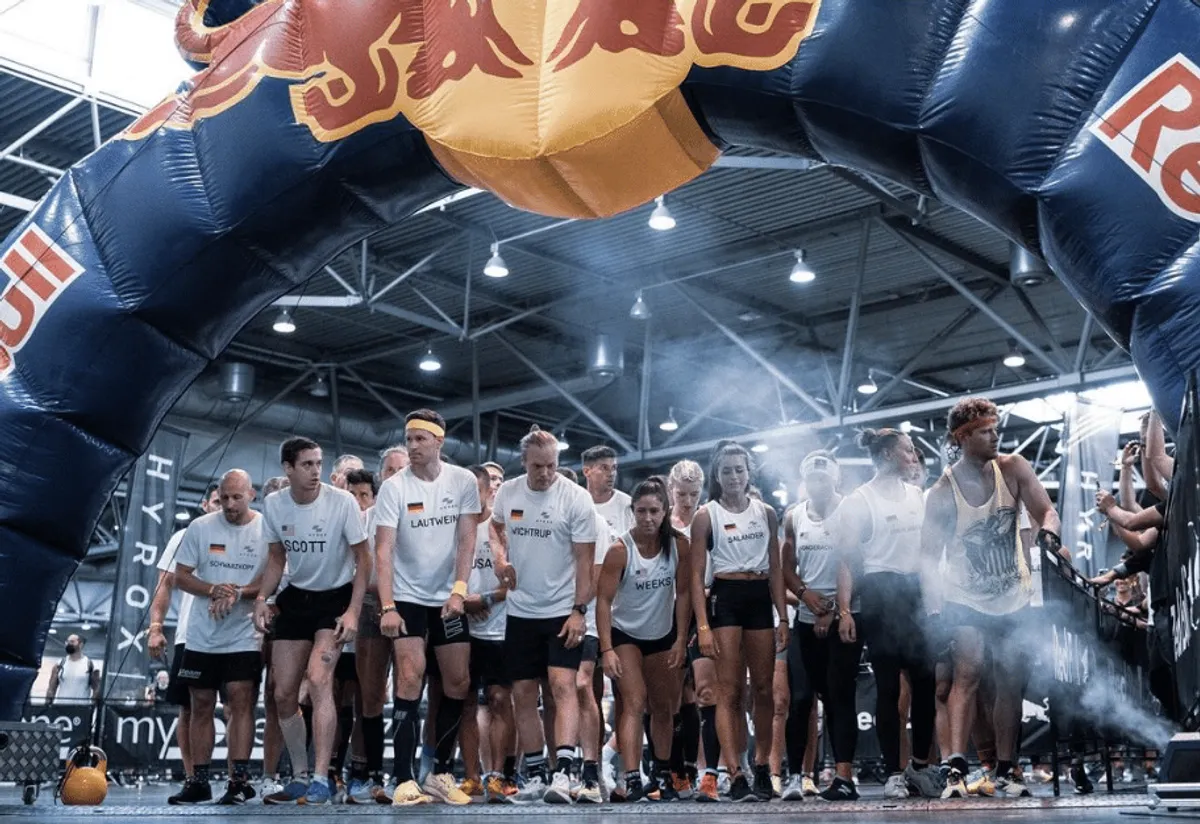
Credit: HybridFitty on Wikimedia Commons
There’s a new buzzword echoing through gyms, studios, and start lines from Chicago to Sydney: HYROX. Dubbed “the marathon of functional fitness,” HYROX combines eight 1‑km runs with eight strength‑endurance stations for a full‑body test that’s as addictive as it is demanding. In 2024 alone, HYROX exploded to 5,000+ Training Clubs worldwide and welcomed 650 k athletes across 83 events—a growth curve endurance sport hasn’t seen since the Ironman boom of the 1980s.
Yet, for runners, cyclists, triathletes, and rowers, the question remains: How do I slot these high‑octane strength sessions into an already packed training calendar—without wrecking recovery?
Answer: Athletica’s newly launched Global Library. With a single search bar, you can drag‑and‑drop 58 (and counting) HYROX strength training sessions—each demonstrated by me, Coach MJ—directly into your adaptive plan. No spreadsheets, no guesswork, no risk of over‑training.
In this guide you’ll learn:
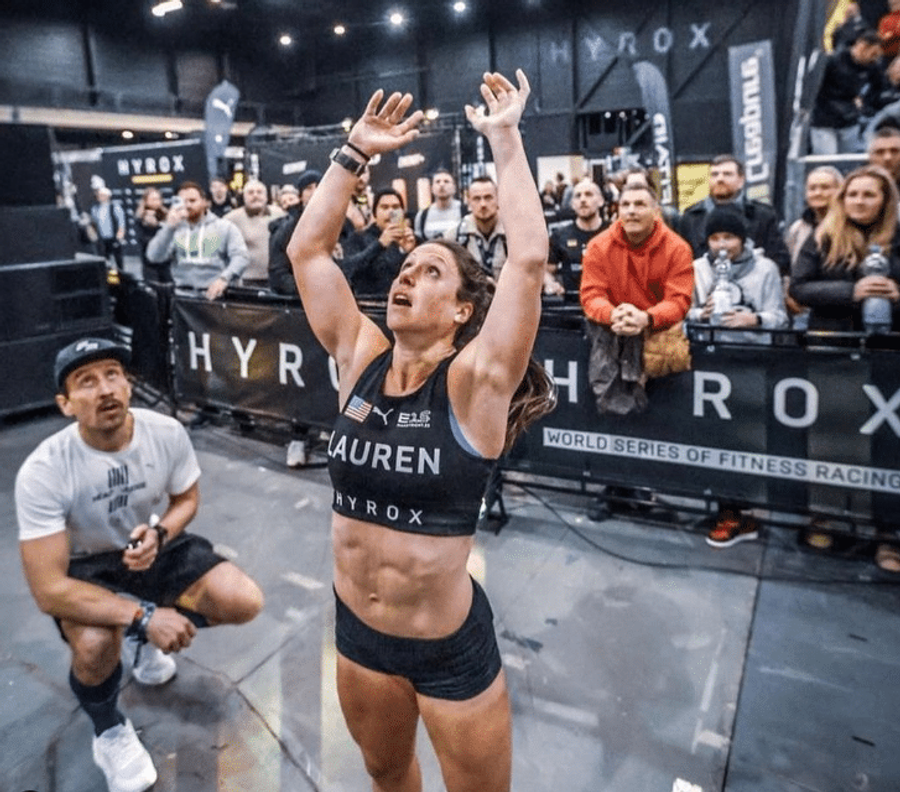
Credit: HybridFitty on Wikimedia Commons
HYROX races follow a simple yet savage format—run 1 km, crush a functional station, repeat eight times. Stations range from sled pushes to burpee broad jumps, taxing every energy system in roughly an hour.
Did‑You‑Know? HYROX co‑founder Christian Toetzke projects one million participants by 2027, citing “latent demand for functional competition” similar to mass‑marathon culture.

You’ve heard it before—“lifting makes you faster.” But did you know that 90 minutes of progressive strength work per week can reduce biological age by ~4 years? (Fiatarone Singh et al., 2022). Beyond speed, HYROX strength training sessions deliver benefits traditional mileage can’t touch:
In short, strength isn’t a “nice‑to‑have” for endurance athletes—it’s a disease‑risk reducer and a longevity multiplier.
Athletica’s adaptive engine has always customized run, bike, swim, and row sessions based on your real‑time data. Now, with the Global Library, we’re opening the vault to every sport and discipline—starting with HYROX.

Every session includes a demo video highlighting form cues, common faults, and scaling options. You can watch inline—no app‑switching.
Pro‑Tip ♛ Use the Show Details toggle to check exercise and equipment needs before scheduling; most sessions require only kettlebells, dumbbells, or a box.

Below are three example pathways—beginner, intermediate, and advanced—so you can integrate HYROX strength training while respecting recovery, volume, and specificity.
Monitor HRV: drop any HYROX session if AI-Coach signals that morning HRV has fallen below baseline.
A: Yes—each session is programmed as a full‑body strength circuit covering push, pull, hinge, squat, and carry patterns, so you can skip conventional gym work if time‑pressed.
A: One in base phase, two in build, and zero during race week to allow full recovery.
A: No—research shows heavy strength work can improve running economy and cycling power without reducing VO₂ max when total volume is balanced (Laursen & Buchheit, 2018).
A: The multi‑joint resistance moves stimulate type II muscle fibers and anabolic pathways shown to mitigate age‑related muscle loss (Narici & Maffulli, 2018).
A: Single‑leg squats, box jumps, kettlebell suitcase carries, and lateral lunges train proprioception and ankle stability critical for efficient stride and pedal stroke (von Rosen et al., 2023).
A: Regular resistance exercise is linked to reduced all‑cause mortality and favorable biological‑age markers; HYROX provides the requisite mechanical load and intensity (Attia, 2023).
A: Yes—Athletica’s “Movement Intro” sessions scale weights and volume; start with body‑weight variations before adding load.
A: A pair of kettlebells or dumbbells, a medicine (wall) ball, a sled or prowler (or heavy sandbag or wheelbarrow), and space to run short shuttle intervals.
A: 24 hours after an easy S&C session and up to 48 hours following a heavy “Station Chain” day to let neuromuscular fatigue dissipate (Laursen & Buchheit, 2018).
A: Yes—substituting 10–20 % of weekly endurance time with high‑force training can maintain VO₂max while improving power and resilience (Tschopp et al., 2023).
Want to see how Athletica can help you perform your best at your HYROX event?
Start Free TrialNo credit card required
Attia, P. (2023). Outlive: The Science and Art of Longevity. Harmony.
Fiatarone Singh, M. A., et al. (2022). Resistance training and balance in older adults: A systematic review. Sports Medicine, 52(10), 2345–2361. https://doi.org/10.1007/s40279‑022‑01689‑7
Laursen, P. B., & Buchheit, M. (2019). Science and Application of High‑Intensity Interval Training: Solutions to the Programming Puzzle. Human Kinetics.
Narici, M. V., & Maffulli, N. (2018). Sarcopenia: Characteristics, mechanisms, and functional significance. British Journal of Sports Medicine, 52(7), 360–364. https://doi.org/10.1136/bjsports‑2017‑098219
Schoenfeld, B. J., Ogborn, D., Krieger, J. W., & Contreras, B. (2023). Effects of resistance training on lean body mass in endurance athletes: A meta‑analysis. Journal of Strength and Conditioning Research, 37(4), 845–856. https://doi.org/10.1519/JSC.0000000000004321
Tschopp, M., Högberg, G., et al. (2023). Combined strength and endurance training for improved endurance performance: An updated systematic review. Sports Medicine, 53(2), 255–272. https://doi.org/10.1007/s40279‑022‑01710‑z
von Rosen, P., Heijne, A., & Frohm, A. (2023). Preventive effect of strength training on overuse injuries in long‑distance runners: A systematic review and meta‑analysis. Sports Medicine, 53(5), 987–1003. https://doi.org/10.1007/s40279‑022‑01765‑y
HYROX® is a registered trademark of Upsolut Sports GmbH. Athletica Inc. is not endorsed by or affiliated with HYROX. Race names are used solely for descriptive and comparative purposes.



