How a self-coached athlete won IRONMAN Canada–Ottawa with Athletica AI (8:40:22)
August 21, 2025
Mark Bridges
Inside a championship blueprint: How engineer Luke Evans used Athletica’s AI training platform, HRV tracking, and disciplined load management to balance a 40-hour work week and win IRONMAN Ottawa 2025 by over 22 minutes. Copy his exact workout and pacing strategies.
What made the difference: disciplined load management, simple but specific intensity progression, HRV-guided readiness—and one big fueling lesson to fix.
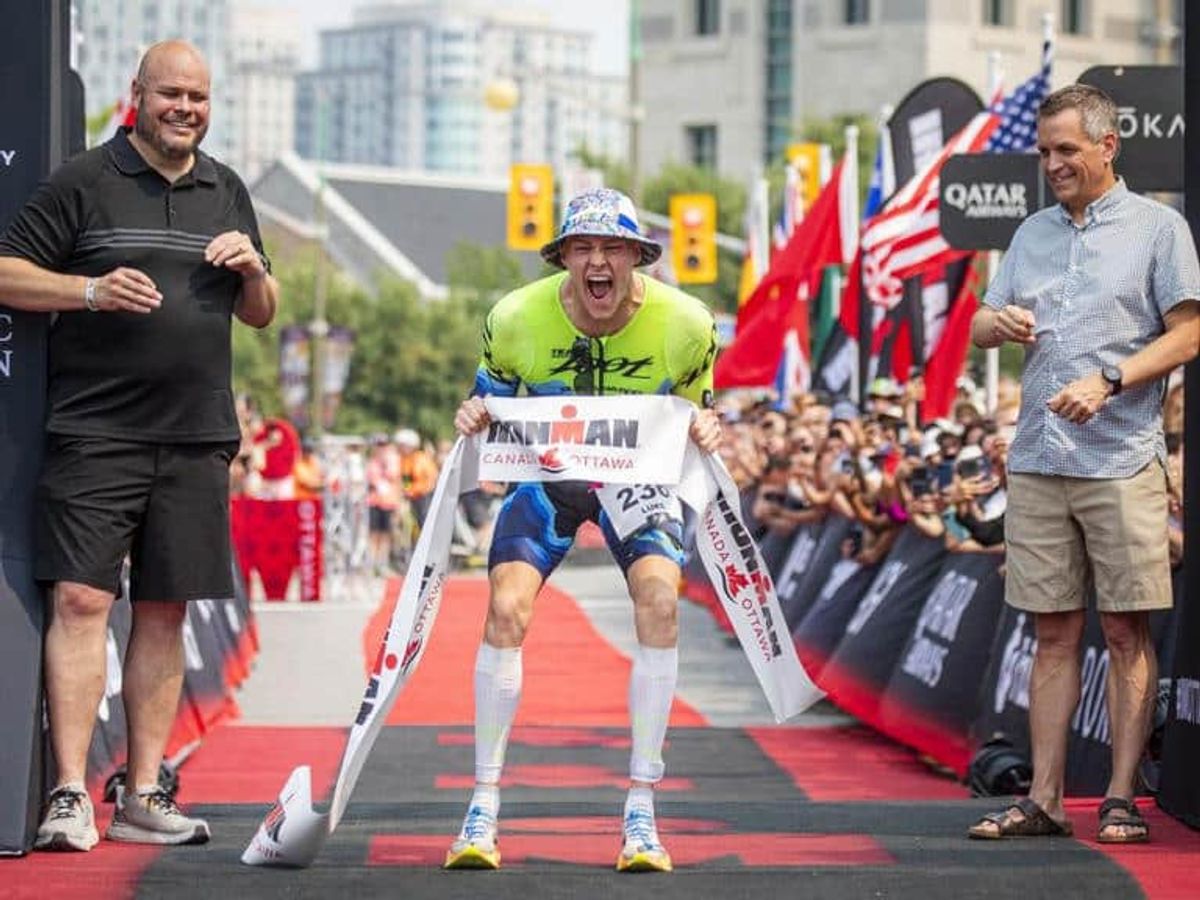
Media context: CTV captured Luke’s reaction “first across the line” on race day
Watch the story
Chapters
02:41 – From Ice Rinks to Endurance Sport How growing up as a hockey player shaped Luke’s athletic mindset—and why COVID changed everything.
05:59 – DIY Triathlon: His First Olympic Distance Race Luke trains himself to run and stages his own Olympic triathlon at a cottage during lockdown.
07:08 – First Ironman: No Power Meter, No Coach, Still Sub-11 Luke signs up for Ironman Wisconsin with minimal gear and knowledge—and surprises himself with a 10:50 finish.
14:05 – Breaking the Tape at Ironman Ottawa (8:40!) A full breakdown of Luke’s race strategy and execution in Ottawa—from swim tactics to pacing the run.
23:35 – Training with AI: Inside Luke’s Athletica Routine How Luke uses Athletica’s AI coach to manage load, recover properly, and plan his entire season.
27:20 – Balancing Work and World-Class Performance Luke reflects on training 20+ hours per week while working 40+ as an engineer—and how his employer reacted to his Ironman win.
29:59 – A Crash, a Comeback, and Staying on Track Luke shares how he bounced back from a brutal crash just weeks before race day and still peaked on time.
32:59 – Why Smart Data Beats Guesswork for Athletes Luke explains how using training data helped him “feel” his fitness, adjust when needed, and stay consistent long term.
41:22 – Final Thoughts and What’s NextA look at Luke’s next big goal (Ironman Arizona) and how he plans to level up—again.
How Luke trained with Athletica (the repeatable blueprint)
1) Load management you can actually follow
Luke watched his Performance Potential climb over months, letting Athletica’s plan do the heavy lifting: when work needed to increase, it did; when the taper needed to pull freshness up, it did. You’ll see the rise-plateau-taper shape clearly in the Performance Potential chart.
Coach tip: Progress is slow in endurance. Use a simple, visible load curve to keep buy-in high during the “no-PR weeks.”
Figure 1. Athletica Performance Potential chart showing progressive training load, taper, and race-day readiness for Luke Evans’ 8:40 win at IRONMAN Canada–Ottawa 2025
2) Nail the work, flex the duration
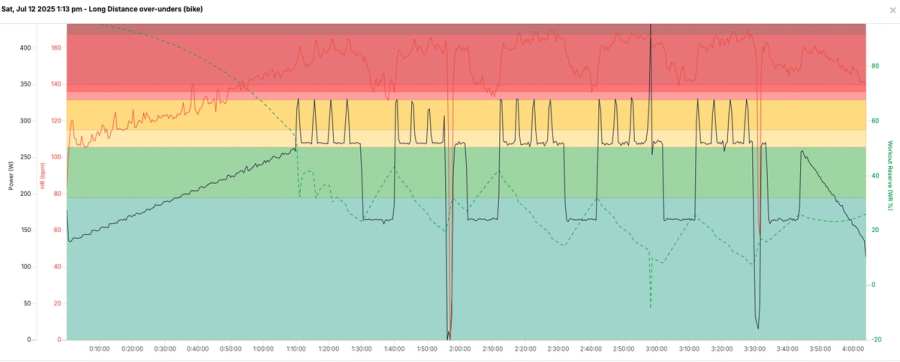
Luke locked a life-friendly habit: 4-hour Saturday long rides—every week. If Athletica prescribed 2×40’ steady or over/unders, he did those exact work blocks, then flexed warm-up/cool-down to fit the 4-hour window. Consistency > perfection.
Figure 2. Over–under session from Luke Evans’ Ottawa build. Athletica prescribed the exact work (e.g., 2×40′ steady or over/unders) and Luke locked it inside a consistent 4-hour Saturday ride by flexing warm-up/cool-down—consistency over perfection.
3) Progressive intensity that peaks at the right time
Threshold sets grew in duration (e.g., 3×8’ → 5×12’).
VO₂ blocks scaled density (e.g., 30/30s: 2×5’ → 4×10’ near peak).
Long run evolved from steady → quality inside the long run late in the build.
Figure 3. Progressive intensity that peaks at the right time: a late-build week where Athletica extends threshold duration, increases VO₂ density, and adds quality to the long run—while Luke keeps the long ride time fixed and uses easy/recovery days to absorb the work before taper.
4) HRV-guided readiness to protect the highs
Luke tracked Recovery/HRV to gatekeep workouts and confirm readiness and freshness—particularly after a July 5 car collision. The chart shows a transient stress blip and rebound before race week.
Figure 4. HRV-guided readiness to protect the adaptations: a July 5 stress blip (red arrow) after a car collision, then a clear rebound into race week—evidence Luke used to gatekeep intensity and confirm freshness.
5) Pragmatic swim & strength
Swim frequency was pared to 2 purposeful long-course sessions/week focused on strength/technique (paddles, long repeats). “Strength” blocks shifted to targeted physio for durability—still within Athletica’s overall load guardrails.
Race execution (compressed)
Swim — control the current, control the race
Rolling start, lined up a few rows back, sighted quickly, then committed to a hard first half into current/waves to break elastic. Soloed to ~54:00. (Ottawa River course, 3.8 km.)
Figure 5. Swim exit — IRONMAN Canada–Ottawa 2025. Luke Evans nails his “hard into the current” plan for an ~54-minute swim, creating early separation while conserving energy.
Bike — steady power, solve problems fast
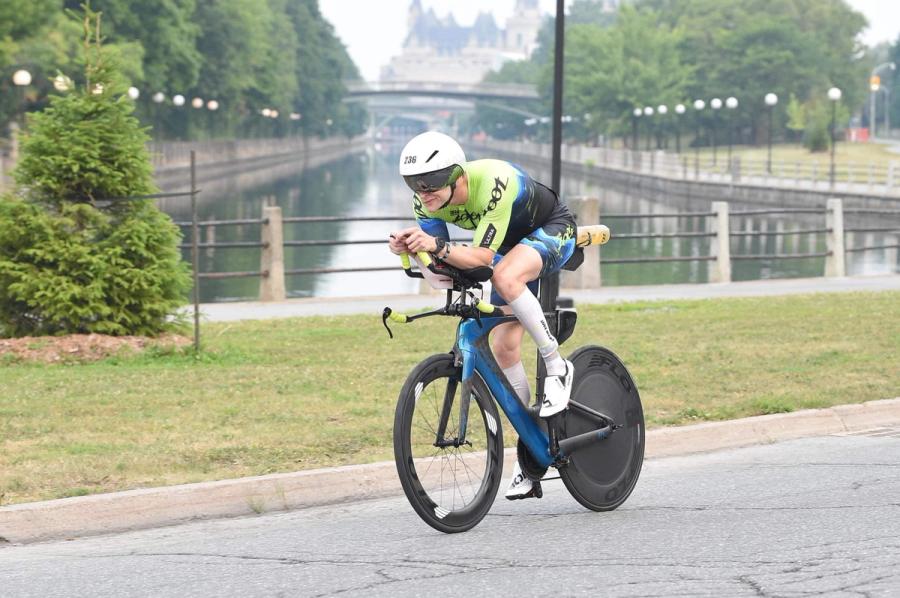
Early head unit hiccup (no speed/power) → quick reset; nutrition bottle (maple syrup mix) ejected at ~5 km → stopped, retrieved; later lost rear cages on rough roads → adapted with aid-station hand-ups + front reservoir. Still rode ~4:28 and held the gap.
Photo credit Ashley Fraser
Key numbers at a glance
Finish:8:40:22 (overall win).
Swim: ~54 min (rolling start, into current strategy).
Bike:4:28 (early bottle + cage issues, solved).
Run:3:13 (GI-limited; pace rebounded after relief).
Margin:+22:05 to 2nd (Shane Lynch).
Field size: ~3,000 registered.
Exactly how Athletica helped
Performance Potential: shows the long build → controlled taper dip → race-day execution.
Recovery / HRV: validates readiness, plus the sleep push in the final 10–14 days.
Workout Alternates: how Luke kept the intended stress when life/time shifted.
Long-run specificity: the late-phase addition of threshold/VO₂ inside long runs.